کت فیش مرمری باله بادبانی/ Leiarius
|
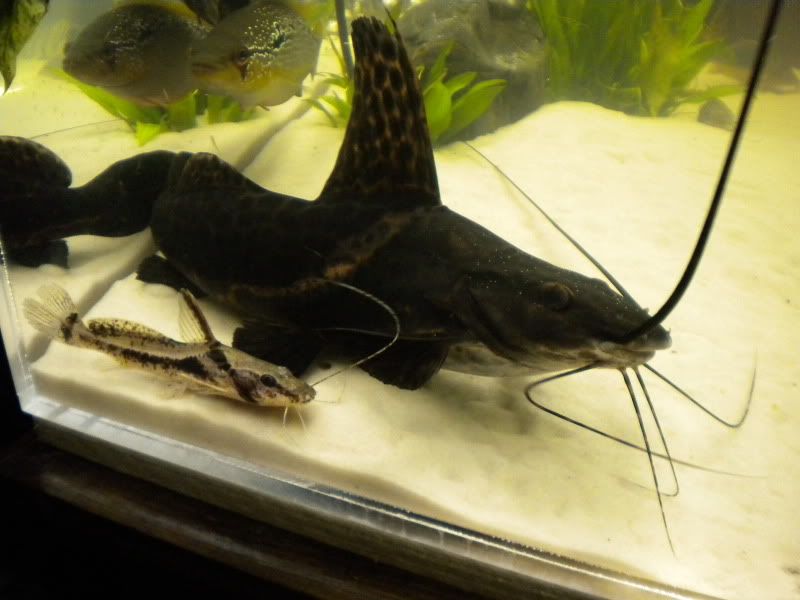
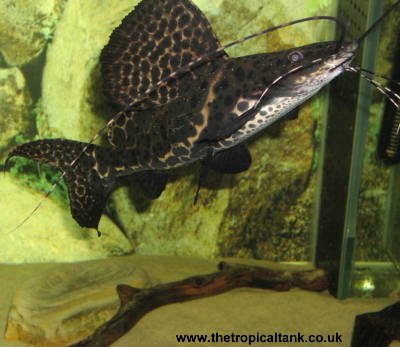
گربه ماهی مرمری باله بادبانی گربه ماهی مرمری باله بادبانی / Sailfin Marbled Catfish / Leiarius pictus نام این ماهی در ایران به ردتیل یا دراگون پلنگی و چیز های شبیه این معروف تر است. خلق و خوی این ماهی نیز شبیه ردتیل است از نظر قیمت گرانتر از ردتیل و کمیاب است.
نام علمی: Leiarius pictus اسامی عمومی: Sailfin Marbled Catfish ( گربه ماهی مرمری باله بادبانی ) زیستگاه اصلی: آمریکای جنوبی / حوزه رودخانه های آمازون و ارینوکو
Leiarius pictus (Müller & Troschel, 1849) |



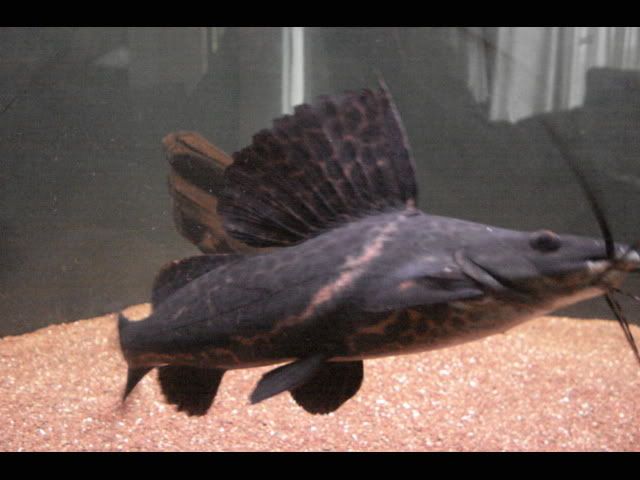
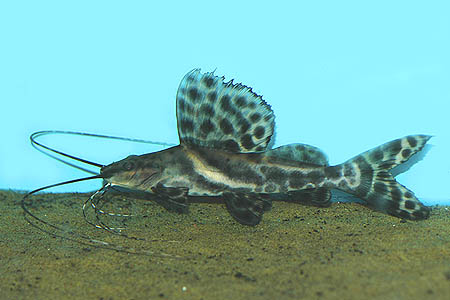
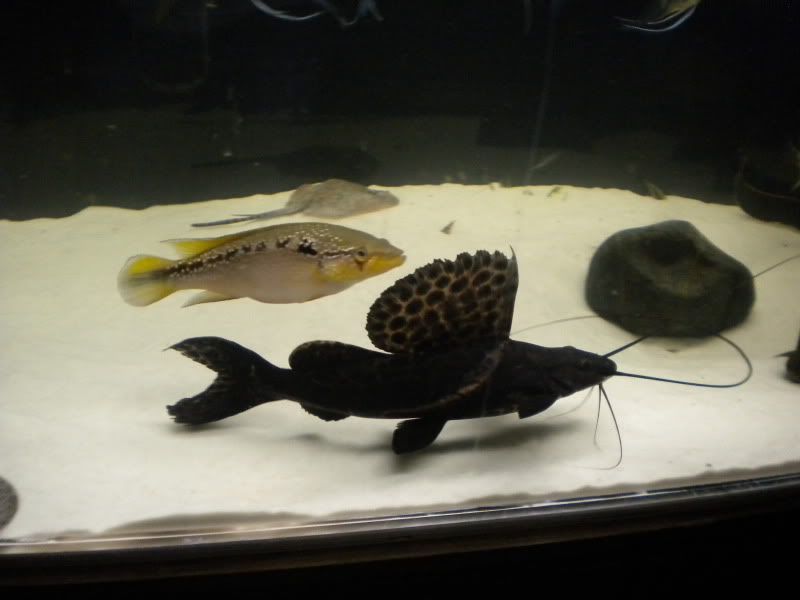
Painted Catfish, Saddle Catfish, Sailfin Marbled Catfish, Sailfin Pim
No locality
Bagrus pictus, Sciades pictus
pick tuss
The genus name is derived from Leios, meaning smooth and Arius which is a Greek for "dealing with Mars, warlike, belliose". It's the name of another catfish genus, so the combination is "smooth Arius". This specific epithet literally means painted (pictus=painted) and refers to the spots of the adult of the species
Species Information
600mm (23.6") SL. Find near, nearer or same sized spp
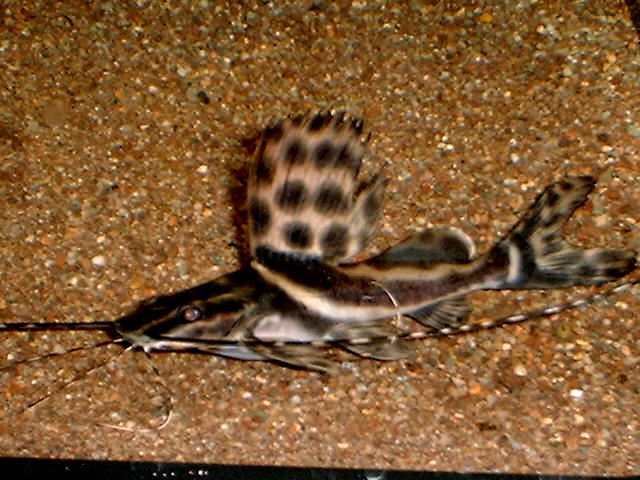
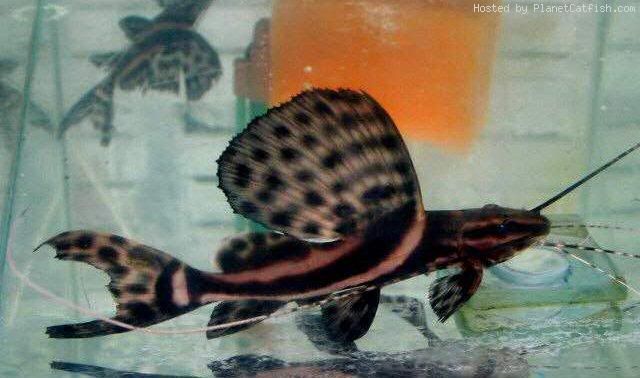
This catfish is sometimes confused with Leiarius longibarbis (formerly known as L. marmoratus). The overall body colour of L. pictus is dark brown with darker spots, with a lighter underside colouration. More noticeable in juvenile specimens this catfish has two pale bands, the first extends from the base of the dorsal fine spine toward the ventral fin, and then laterally along the body to the base of the caudal; the second thinner band lies parallel to the first originating from the base of the third to sixth soft dorsal fin rays
See the images above of the male and female genital areas. Observation of cpative adult fishes points towards females tending to be more heavily built and robust than the males, which tend to be slender
Habitat Information
6.2 - 7.6
22.0-26.0°C or 71.6-78.8°F
Up to 18°dGH
Husbandry Information
Carnivore feeding on a very mixed and varied diet including earthworms, whole prawns, mussels, floating sticks/pellets and catfish pellets. In their natural environment they would feed upon other fish
Large, spacious tank with open space for night time cruising. A large shady bogwood root or pipe that the catfish can retreat to during the day is also required. Ensure the heater is in the open and not in a place where the catfish may try and hide
Ideally suited to life with other large fish. These catfish are predatory and will eat smaller fish if hungry
Other large catfish such as Pseudodoras, Oxydoras, Pterodoras and Megalodoras, Oscars and larger characins
There are no known aquarium spawnings of this catfish. This is most likely due to the size that these fish can attain and hence the subsequent size of aquarium in which to spawn them